Coyotes on the Trail: What It Means to Share Space with Wildlife
01/14/2026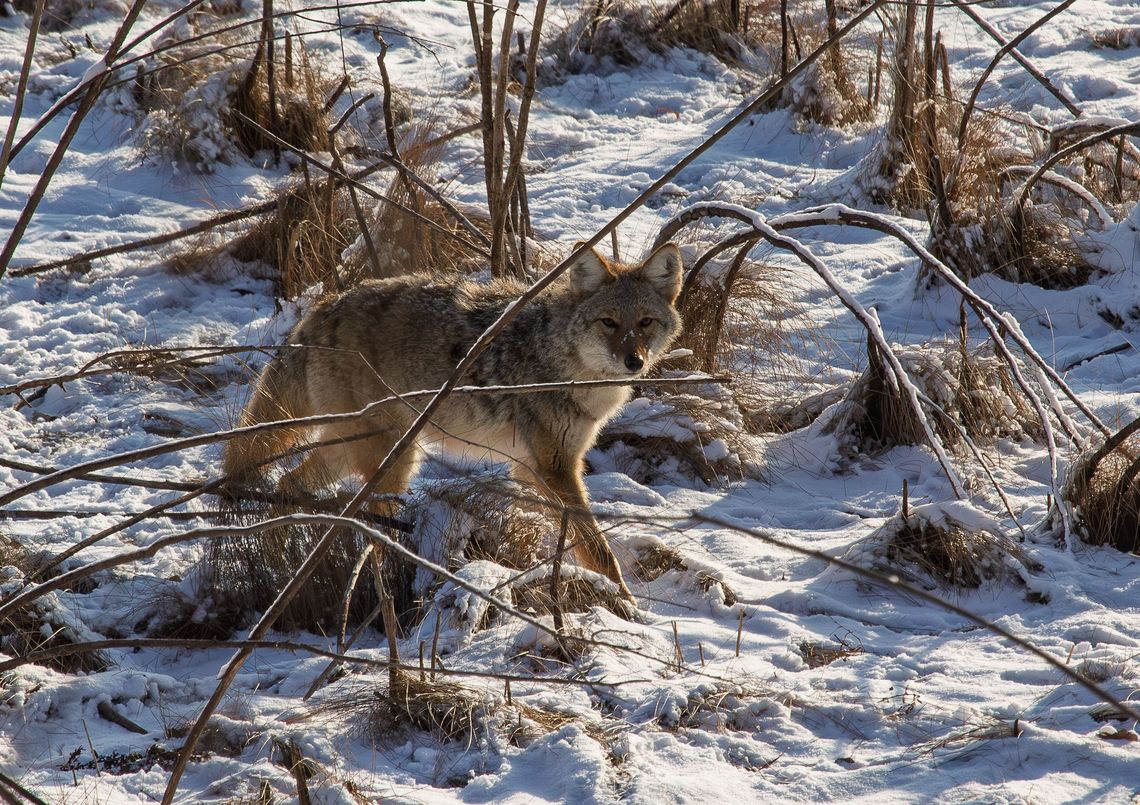
Recently, trail users have reported seeing coyotes along the Green Ribbon Trail near Ambler, and at the Wissahickon Waterfowl Preserve. While sightings like this can be surprising, coyotes are an established part of the local ecosystem in Pennsylvania, according to the Pennsylvania Game Commission.
Still, these moments can be a helpful reminder: our preserves may be surrounded by a highly developed region, but they are still living landscapes where wildlife moves freely. Understanding that context helps everyone enjoy the trails safely and responsibly.
Are coyotes dangerous?
Coyotes are small, wary animals that typically avoid people and large animals. Coyotes are not considered a threat to people, children, or horses, and attacks on humans are extremely rare. Most sightings are brief, with the animal passing through and continuing on its way.
What to do if you see a coyote
A calm, consistent response is recommended if you encounter a coyote on the trail:
-
Stay calm and continue moving steadily, don’t run
-
Give the animal space and avoid approaching or feeding it
-
If needed, make yourself appear larger and use your voice or noise to encourage the animal to move along
These techniques, often referred to as “hazing,” are supported by organizations like Coyote Smarts and help reinforce coyotes’ natural wariness of people.
What this means for dog owners and horseback riders
For dog owners, keeping pets leashed at all times (and picking them up, if they're small) is especially important. Leashes allow owners to manage situations safely and predictably.
For horseback riders, coyotes do not pose a threat to horses due to their size. However, U.S. Rider equestrian safety guidance explains that horses can be startled by sudden or unexpected movement from wildlife, whether it’s a deer, bird, or coyote. Remaining calm, maintaining control, and continuing steadily down the trail helps prevent sudden reactions and keeps riders, horses, and other trail users safe.
Sharing trails in a living landscape
Our preserves may be surrounded by roads, neighborhoods, and businesses, but they remain connected natural systems. Wildlife sightings are part of what makes these places special. Respecting that wildness, through simple actions like leashing dogs, giving animals space, and staying aware, helps keep people, pets, and wildlife safe and enjoying the trail.