Clear Roads, Salty Waters: the Hidden Costs of Winter Safety
01/12/2026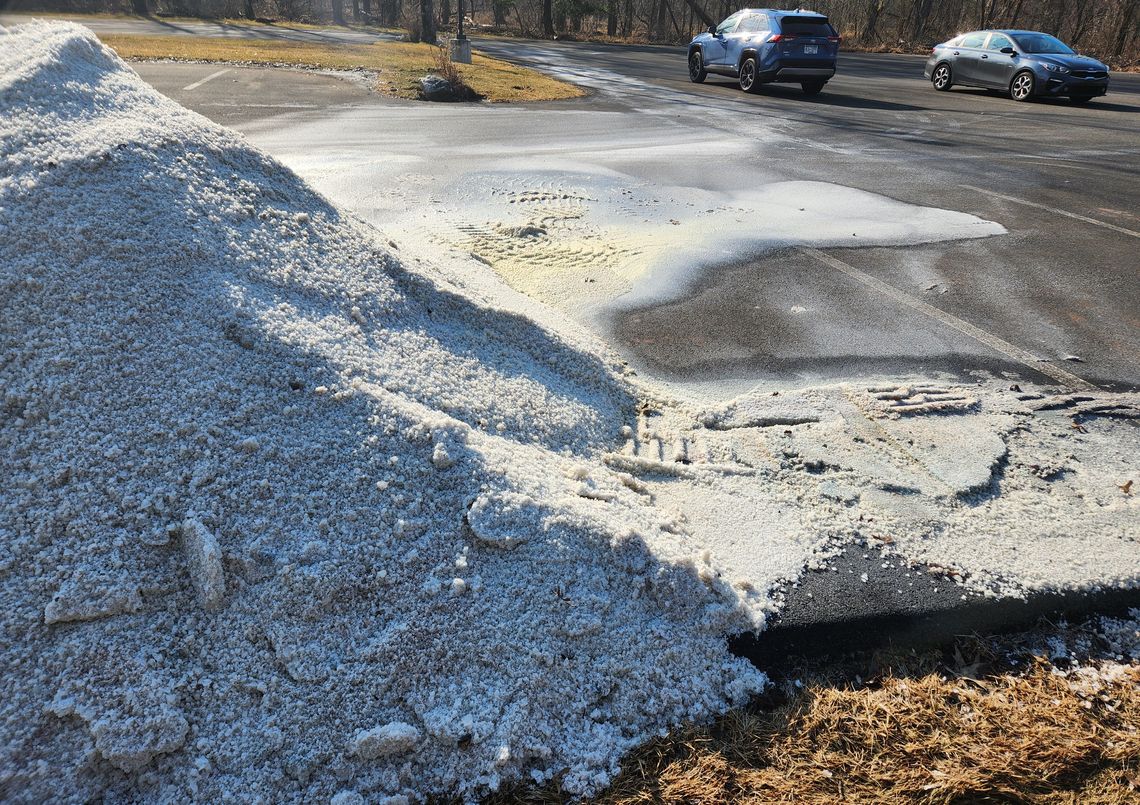
By Erin Landis, Water Programs Manager at Wissahickon Trails
Winter road salt keeps us safe when conditions turn icy. But once the snow melts, that same salt doesn’t disappear. It washes into nearby streams, quietly changing the water chemistry year-round of the places many of us walk, bike, and explore. Salinity of freshwater waterways has been increasing over the past 20+ years due to increasing road salt use.1 We are not advocating for the elimination of road salts! Road salts can be used to support public safety while minimizing environmental damage. Reducing overapplication and addressing improper salt storage and spills can reduce salt migration to streams and groundwater without affecting public safety.
Excess salt builds up over time and is persistent in the environment. Salt does not break down or wash away easily, which means its impacts can last long after winter ends. In some Philadelphia-area streams, salt has been recorded at levels higher than ocean water! 2 Excess road salt runs off into the streams and infiltrates into groundwater that supply our drinking water, sometimes doubling or tripling the normal sodium levels in tap water. We also all share the financial cost: according to the US Environmental Protection Agency, corrosion from road salt causes billions of dollars in damage to vehicles and infrastructure nationwide each year. 3
Salt ensures safe roads and walkways during winter storms and literally saves lives. However, liability concerns can lead to over-application, resulting in harmful effects and little to no safety benefits gained. Improper salt storage practices, such as uncontained salt piles, allow salt to leach into streams and groundwater. Together, these practices point to a clear opportunity to better balance winter safety with protecting water quality.
This winter, advocates are working to close this gap. Organizations like Stroud Water Research Center and the Izaak Walton League of America mobilize volunteers to monitor salt and address the problem. In 2025, concerned residents formed the Pennsylvania Road Salt Action Working Group, a collaborative effort focused on practical solutions that support both public safety and healthy waterways.
House Bill 664, currently under consideration by the PA Senate, would direct PennDOT and the Department of Environmental Protection to create best-practice guidelines that minimize environmental harm while maintaining road safety. A statewide guide that sets minimum standards for best practices is a good place to start in providing solutions.
What Can You Do?
-
Follow House Bill 664 and share your support with your local legislators.
-
Talk to your local municipality about local salt application and storage.
-
Consider joining the Pennsylvania Road Salt Action Working Group.
-
Spread the word and, reduce your own salt application when possible.
-
Get involved in community science.
You can monitor chloride levels in local streams and waterways using simple test strips generously provided by the Izaak Walton League of America (IWLA). Community-based monitoring helps build a clearer picture of how road salt moves through our watershed over time, and the data collected by community scientists is available to view on the IWLA website. No prior experience is needed to participate in this effort, just curiosity and a willingness to participate. Chloride monitoring kits can be ordered directly from the IWLA website (for free!), or picked up at the Wissahickon Trails headquarters (also for free!).
Passionate residents making their voices heard are the best force for change. Protecting clean water doesn’t require choosing between safety and stewardship. When communities work together and speak up, small changes add up to lasting impact.
Sources
1 - https://www.usgs.gov/mission-areas/water-resources/science/chloride-salinity-and-dissolved-solids
3 - https://www.epa.gov/snep/winter-coming-and-it-tons-salt-our-roads